On 29 May, 2026, the results of the European Homelessness Counts (EHC) conducted across 35 cities is presented. The discussion explores key lessons learned from the project, speakers share practical experiences from selected cities, and reflect on the overall process and impact of the initiative.
Participants will gain insights into different methodologies, common challenges, and good practices that can help inform future homelessness counts and policy development.
Speakers & 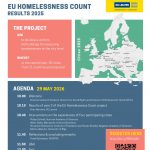 Moderator:
 Katarina Ivanković Knežević, Director for Social Rights and Inclusion, DG EMPL, European Commission Koen Hermans, Researcher LUCAS KU Leuven, EHC project team Philipp Schnell, Researcher, Austrian Academy of Sciences Albert Sales Campos, Researcher, Metropolis Institute Barcelona Stoyanka Cherkezova/Mateva, Researcher, Institute of Population and Human Studies, Bulgarian Academy of Sciences Kārlis Lakševics, Researcher, University of Riga Freek Spinnewijn, Director, FEANTSA Nora Teller, Researcher MRI, EHC project team
 Register here: https://events.teams.microsoft.com/…/c5b1735b-c971-452d…
 More about the EU – Homelessness Counts: https://www.kuleuven.be/lucas/en/eu_homelessness_counts
Projects
The UPLIFT project ended in June
The UPLIFT project, which was led by the Metropolitan Research Institute, has just finished in June 2023.
We are proud of our international team who did an exciting scientific work in the field of social inequalities among urban young people, and an excellent job in experimenting with a new policy making method, the so called Reflexive Policy Making process.
In the UPLIFT project, we have elaborated interesting research on a European scale, understanding inequalities. If you are interested in data on social inequalities focusing on youth, read the Atlas of inequalities and browse data in our interactive atlas.
In 16 European cities, based on extensive desk research and interviews with local experts and decision makers, we have analyzed the nature of economic processes and policies tackling social inequalities especially among young people in the field of education, employment and housing. The results are thoroughly described in 16 urban reports, which you can download here: https://uplift-youth.eu/local-reports/. A comprehensive study, that compares and concludes the main messages of the Urban Reports can be downloaded here: https://uplift-youth.b-cdn.net/wp-content/uploads/2023/02/D2.4_Synthesis_Report-of-the-16-urban-reports.pdf
In 8 European cities out of the 16, we focused our attention on understanding the mechanisms behind the decisions of vulnerable young people who are stuck in some way in a disadvantaged situation regarding their education, employment or housing. For this in each of the 8 locations we conducted 20 interviews with young people between the age of 15 and 29 and 20 interviews with people who were young and vulnerable during the Great Financial Crisis. The results are written in forms of 8 Case Study Reports. In addition to this we have elaborated 8 bilingual (in English and in local language) Policy Briefs, which contain the main recommendations for Reflexive Policy Making based on the research results of the Case Study Reports.
In 4 European cities: Amsterdam, Barakaldo, Sfantu Gheorghe and Tallinn our partners have experimented with a new policy making technique called Reflexive Policy Making, which in short meant to facilitate a collaborative work between the vulnerable young people in a form of a Youth Board and institutional stakeholders on a specific policy field, to come up with concrete recommendations for changing or creating local initiatives or policies. Their work is concluded with a thorough general guidance in a Guidebook and a Policy Brief
If you are interested in learning briefly about our work, watch this short and free video course and find your way to implement Reflexive Policy Making in your field.
If you are interested more about UPLIFT’s work please find our main outputs on our website: https://uplift-youth.eu/ and find us on social media channels: facebook, instagram, linkedin and twitter.
TExTOUR (2021-2024) Social Innovation and TEchnologies for sustainable growth through participative cultural TOURism.
Cultural tourism is about managing cultural heritage and tourism in an integrated way. It’s about working with local communities to create benefits for everyone involved. This helps preserve tangible and intangible cultural heritage while developing tourism. TExTOUR is an EU-funded project which co-designs pioneering and sustainable cultural tourism strategies and policies. The ultimate goal is to improve deprived areas in Europe and beyond. To do this, it sets up Cultural Tourism Labs at eight pilots located within the EU and outside it. Various societal players and stakeholders in the Cultural Tourism sector will be involved in the Cultural Tourism Labs. The selected pilots have diverse and complementary characteristics, which enables the project’s experts to develop a wide range of scenarios for inland and coastal areas, rural and urban, deprived remote or peripheral areas, facing multiple social, economic and environmental challenges. Are you a policy maker, practitioner or part of a local community? Via the TExTOUR open access platform, we will share with you our knowledge gained as the project unfolds so that you can benefit directly.
For more information visit the website or social media channels of the project:
Webiste: https://textour-project.eu/
Facebook: https://www.facebook.com/textour.project
ComAct (2020-2022) Community Tailored Actions for Energy Poverty Mitigation
The countries in the Central and Eastern European (CEE) region and in the former Soviet Union republics (CIS region) have the most energy-poor people in Europe. This is mainly due to high energy prices and poor energy efficiency of the buildings, heating systems and household appliances.
In this region, the housing stock is predominantly privately-owned and characterised by a large percentage of multi-family apartment blocks (MFAB). This is the result of its mass privatization in the 1990s, along with the deconstruction of the social safety net: without subsidies, utility and energy costs of the flats soared, burdening the family budgets. In parallel, the socialist-era collective maintenance mechanisms were abandoned, and the decay of homeowners’ associations has not been addressed effectively.
Against this backdrop, undertaking renovation works in multi-family buildings requires coordinated action among the apartment owners. To address the complex roots of energy poverty, there is a need to develop a new approach to make interventions affordable, substantially influence energy costs and consequently reduce the high energy poverty level in the CEE and CIS region.
For more information visit the website or social media channels of the project:
Website: https://comact-project.eu/
Facebook: https://www.facebook.com/ComActProject
UPLIFT (2020 – 2022) Young People’s voice at the centre of Youth Policy
The past decade has been a period of polarisation and fragmentation in Europe with the financial crisis and rapid technological change widening socio-economic inequalities. Intergenerational inheritance of (dis)advantage has become increasingly predictive of an individual’s opportunity, and young people in particular have become the demographic age group most at risk of experiencing poverty in Europe. In urban settings these disparities are particularly prevalent.
Policies attempting to mitigate the effects of urban inequality, often disregard affected citizens’ experiences, and thus fail to affect maximum impact. By incorporating these perspectives into the policy design process, UPLIFT aims to find innovative interventions in a bottom-up approach.
Source: https://www.uplift-youth.eu/
ESPON MISTA – Metropolitan Industrial Spatial Strategies & Economic Sprawl (2019 – 2020)
ESPON MISTA – Metropolitan Industrial Spatial Strategies & Economic Sprawl
Duration: October 2019-December 2020
Contracting party: ESPON EGTC
MRI, in cooperation with Politecnico Milano, WIFO – Austrian Institute of Economic Research and Latitude carried out a series of studies on the metropolitan dimensions of urban manufacturing (ESPON MISTA).
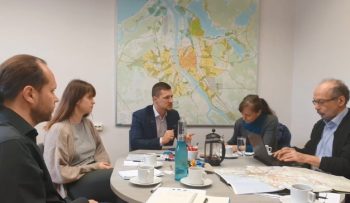
The study was organised around the role of manufacturing in urban areas of Europe with special attention to the forseen challenges of the 4th industrial revolution and the specific sectors of manufacturing in different urban areas that ensure the satisfacton of local needs but keeps the competitive position of cities at the same time. In order to reach these goals the research concentrated on finding the proper coordination mechanisms on metropolitan scale in the framework of fragmented governance systems.
The study evaluated the general trends in the manufacturing sector (decreasing labour force but increasing added value) in and around urban centres and analyses the spatial dynamics of different segments of manufacturing moving out from urban cores. The study also aimed to identify the possibilities for cooperation through which a more optimal division of manufacturing capacities can be achieved on a metropolitan scale based on the cases of Berlin, Oslo, Riga, Stuttgart, Turin, Vienna and Warsaw.
The study concluded that to a certain extent the division of roles in manufacturing between the city cores and their agglomeration is natural: having high added value activities inside cores where land prices are high, while locating manufacturing activities with high land use and transportation needs outside cities. However, this natural phenomenon tends to be harmful in cases where it generates additional transportation flows of goods and people, emptying out the city cores of basic manufacturing activities which provided jobs and sustained services. Thus, stronger interventions by public actors are needed not only on the level of the city but rather across whole urban functional areas to influence locational decisions of individual companies.
Besides analysing the general trends in manufacturing and evaluating the local situation in seven metropolitan areas the project developed a detailed description of inspirational cases that are providing guidelines for a more efficient local manufacturing policy.
All the final outcome of the project can be found at https://www.espon.eu/mista