On 29 May, 2026, the results of the European Homelessness Counts (EHC) conducted across 35 cities is presented. The discussion explores key lessons learned from the project, speakers share practical experiences from selected cities, and reflect on the overall process and impact of the initiative.
Participants will gain insights into different methodologies, common challenges, and good practices that can help inform future homelessness counts and policy development.
Speakers & 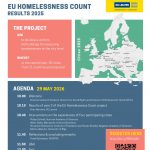 Moderator:
 Katarina Ivanković Knežević, Director for Social Rights and Inclusion, DG EMPL, European Commission Koen Hermans, Researcher LUCAS KU Leuven, EHC project team Philipp Schnell, Researcher, Austrian Academy of Sciences Albert Sales Campos, Researcher, Metropolis Institute Barcelona Stoyanka Cherkezova/Mateva, Researcher, Institute of Population and Human Studies, Bulgarian Academy of Sciences Kārlis Lakševics, Researcher, University of Riga Freek Spinnewijn, Director, FEANTSA Nora Teller, Researcher MRI, EHC project team
 Register here: https://events.teams.microsoft.com/…/c5b1735b-c971-452d…
 More about the EU – Homelessness Counts: https://www.kuleuven.be/lucas/en/eu_homelessness_counts
Poverty and Exclusion Projects
The UPLIFT project ended in June
The UPLIFT project, which was led by the Metropolitan Research Institute, has just finished in June 2023.
We are proud of our international team who did an exciting scientific work in the field of social inequalities among urban young people, and an excellent job in experimenting with a new policy making method, the so called Reflexive Policy Making process.
In the UPLIFT project, we have elaborated interesting research on a European scale, understanding inequalities. If you are interested in data on social inequalities focusing on youth, read the Atlas of inequalities and browse data in our interactive atlas.
In 16 European cities, based on extensive desk research and interviews with local experts and decision makers, we have analyzed the nature of economic processes and policies tackling social inequalities especially among young people in the field of education, employment and housing. The results are thoroughly described in 16 urban reports, which you can download here: https://uplift-youth.eu/local-reports/. A comprehensive study, that compares and concludes the main messages of the Urban Reports can be downloaded here: https://uplift-youth.b-cdn.net/wp-content/uploads/2023/02/D2.4_Synthesis_Report-of-the-16-urban-reports.pdf
In 8 European cities out of the 16, we focused our attention on understanding the mechanisms behind the decisions of vulnerable young people who are stuck in some way in a disadvantaged situation regarding their education, employment or housing. For this in each of the 8 locations we conducted 20 interviews with young people between the age of 15 and 29 and 20 interviews with people who were young and vulnerable during the Great Financial Crisis. The results are written in forms of 8 Case Study Reports. In addition to this we have elaborated 8 bilingual (in English and in local language) Policy Briefs, which contain the main recommendations for Reflexive Policy Making based on the research results of the Case Study Reports.
In 4 European cities: Amsterdam, Barakaldo, Sfantu Gheorghe and Tallinn our partners have experimented with a new policy making technique called Reflexive Policy Making, which in short meant to facilitate a collaborative work between the vulnerable young people in a form of a Youth Board and institutional stakeholders on a specific policy field, to come up with concrete recommendations for changing or creating local initiatives or policies. Their work is concluded with a thorough general guidance in a Guidebook and a Policy Brief
If you are interested in learning briefly about our work, watch this short and free video course and find your way to implement Reflexive Policy Making in your field.
If you are interested more about UPLIFT’s work please find our main outputs on our website: https://uplift-youth.eu/ and find us on social media channels: facebook, instagram, linkedin and twitter.
ComAct (2020-2022) Community Tailored Actions for Energy Poverty Mitigation
The countries in the Central and Eastern European (CEE) region and in the former Soviet Union republics (CIS region) have the most energy-poor people in Europe. This is mainly due to high energy prices and poor energy efficiency of the buildings, heating systems and household appliances.
In this region, the housing stock is predominantly privately-owned and characterised by a large percentage of multi-family apartment blocks (MFAB). This is the result of its mass privatization in the 1990s, along with the deconstruction of the social safety net: without subsidies, utility and energy costs of the flats soared, burdening the family budgets. In parallel, the socialist-era collective maintenance mechanisms were abandoned, and the decay of homeowners’ associations has not been addressed effectively.
Against this backdrop, undertaking renovation works in multi-family buildings requires coordinated action among the apartment owners. To address the complex roots of energy poverty, there is a need to develop a new approach to make interventions affordable, substantially influence energy costs and consequently reduce the high energy poverty level in the CEE and CIS region.
For more information visit the website or social media channels of the project:
Website: https://comact-project.eu/
Facebook: https://www.facebook.com/ComActProject
UPLIFT (2020 – 2022) Young People’s voice at the centre of Youth Policy
The past decade has been a period of polarisation and fragmentation in Europe with the financial crisis and rapid technological change widening socio-economic inequalities. Intergenerational inheritance of (dis)advantage has become increasingly predictive of an individual’s opportunity, and young people in particular have become the demographic age group most at risk of experiencing poverty in Europe. In urban settings these disparities are particularly prevalent.
Policies attempting to mitigate the effects of urban inequality, often disregard affected citizens’ experiences, and thus fail to affect maximum impact. By incorporating these perspectives into the policy design process, UPLIFT aims to find innovative interventions in a bottom-up approach.
Source: https://www.uplift-youth.eu/
OpenHeritage (2018-2022)
OpenHeritage
Organizing, Promoting and Enabling Heritage Re-use through Inclusion, Technology, Access, Governance and Empowerment
Client: Európai Bizottság (DG Research and Innovation)
Duration: June 2018 – May 2022
Project website: https://openheritage.eu/
Social media: https://www.facebook.com/OpenHeritageEU/
The project, funded under DG Research and Innovation’s H2020 framework programme, creates a sustainable management model of heritage assets. We work with an open definition of heritage, and involve sites that are not listed or incorporated into the official heritage discourse. The OpenHeritage consoritum concentrates 16 partners, among which universities and research institutes, SMEs, and NGOs, and is led by Metropolitan Research Institute. The project coordinator is Hanna Szemző, managing director of Metropolitan Research Institute.
The consortium focuses on buildings, complexes, and spaces which lie outside traditional and centrally located heritage spaces, but have an important symbolic or practical significance for local and trans-local communities. Through community and stakeholder involvement, resource integration, and territorial embeddedness, OpenHeritage selects, surveys and analyses peripheral, often marginalised and neglected heritage sites spread over sixteen Observatory Cases and six Cooperative Heritage Labs in ten European countries.
For the high resolution project poster, please click on the image below:

HomeLab: Integrated Housing and Labour Services in the Social Rental Enterprise Model (2016-2019)
Project duration: 2016 october – 2019 march
Client: Programme for Employment and Social Innovation (EaSI) of the European Commission.
MRI is the coordinator of HomeLab.
HomeLab aims to implement the Social Rental Entreprise (SRE) model in five pilot projects in four Central and Eastern European (CEE) countries ((CZ, HU, PL, SK). The pilots allow the adaptation of the model to the local circumstances in countries with varying social benefit and service provision systems, taking into account the differences in the institutional environment, housing systems and labour market conditions. Based on the experience the refinement of the SRE model will be developed for each pilot that will contribute to scaling up the results, to the possible adaptation of the model both on national and on EU level in order to ensure institutional and financial sustainability beyond the grant period. Furthermore, based on the synthesis of the national models EU level recommendations will be developed with regard to how the EU could support/promote the wider application of the SRE model in other Member States.