• Skip to main content
  • Skip to primary sidebar

Metropolitan Research Institute

Metropolitan Research Institute, Budapest

  • Introduction
    • About us
    • Staff
    • Contact
  • News
  • Projects
  • Publicity
    • Publications
    • Lectures and interviews
    • Studies
  • HomeLab
  • OpenHeritage
  • Hungarian
  • UPLIFT
  • MRI2019
  • Visegrad Grant
  • SHARED Green Deal
  • SOLACE-CEE
  • AHA Budapest

Projects

Analysis of the governance of five metropolitan areas in Europe (2017)

2017-12-19

Client: Metropolitan Authority of Barcelona

Duration: November 2017 – December 2017

The Metropolitan Authority of Barcelona contracted MRI to evaluate the operation of five metropolitan areas in Europe in order to gain practical suggestions on how to intensify the metropolitan cooperation around Barcelona. The metropolitan areas under analysis were Amsterdam, Copenhagen, Manchester, Stuttgart and Zürich. From these five metropolitan areas Stuttgart has the strongest governance structure with a directly elected parliament; Greater Manchester has weaker legitimacy but stronger metropolitan identity, more competences in service provision. The Zürich Metropolitan Area Association has common projects with limited influence so far, but it has an approved metropolitan spatial plan. A somewhat weaker cooperation characterizes Copenhagen, where a strong metropolitan spatial plan is created by the national government, but there is no institutional framework for further metropolitan cooperation in place. A similar level of cooperation operates in Amsterdam, where the institutional structure is evolving incrementally, but they lack the proper spatial framework, and the cooperation is mostly based on bi- and multi-lateral negotiations.

Barcelona Metropolitan Area is more developed than any of these metropolitan features still there are approaches and tools that may be interesting for them like having a directly elected president, building partnership with economic actors, acquiring more devolved competencies, improving the efficiency of spatial planning.

The study elaborated by MRI, Addressing the Metropolitan Challenge in Barcelona Metropolitan Area, was presented in a workshop on the 15 of June 2018 for the decision makers of the Metropolitan Council of Barcelona.

Filed Under: Egyéb, Featured, Functional urban areas – urban governance, Projects, Urban Development Projects

SPIMA – SPATIAL DYNAMICS AND STRATEGIC PLANNING IN METROPOLITAN AREAS (2016-2017)

2017-12-01

The spatial concept of Zürich metropolitan Area – METRO-ROK

Client: ESPON EGTC

Duration: November 2016 – December 2017

MRI, under the coordination of Alterra (Wageningen University) and in cooperation with the Norwegian Institute for Urban and Regional Research was commissioned by ESPON to implement a targeted analysis in order to evaluate the results of metropolitan governance in ten European metropolitan areas, and develop guidelines to improve the efficiency of cooperation, specifically in the field of spatial planning. In all 10 stakeholder areas 6-10 interviews were carried out and all the relevant metropolitan documents were analysed. MRI was particularly responsible for the case of Brno, Prague and Vienna.

The analysis of the cases highlighted that the benefits of metropolitan cooperation are obvious on expert level, while it is much more difficult to convince the local stakeholders. As far as win-win development projects are concerned the cooperation can be set up in a bottom-up way. In case the interests of some of the parties can be hurt at least on the short run than top-down interventions are needed: this is the case when regional or national authorities enter the process and create the legislative framework.

Spatial planning is a good tool for cooperation even in the absence of formal metropolitan organisation. This is usually one of the first steps of cooperation (just after the common transportation systems), however the strength of different spatial plans differs very much and most of them lack the tools for implementation: e.g. these plans can restrict growth where it may be harmful for nature but can hardly accelerate growth where it would be more economical. Still the SPIMA project called the attention of the stakeholders that the survey among the 10 stakeholders discovered the importance of knowledge sharing and the human factor behind the cooperation: one of the most relevant success factors turned to be leadership and putting the question into the political agenda.

Outputs of the projects are available here.

Filed Under: Functional urban areas – urban governance, Projects, Urban development, Urban Development Projects

Affordable Housing in Central and Eastern Europe: Identifying and Overcoming Constraints in New EU Member States (2016-2017)

2017-10-10

Project duration: December 2016 – September 2017

Client: European Housing Partnership (EHP)

Metropolitan Research Institute was involved in the project “Overcoming Obstacles to the Funding and Delivery of Affordable Housing Supply in European Cities”: as housing policy advocacy groups have been becoming increasingly aware of the structural differences of housing affordability challenges and possibilities in old and new EU member states, MRI was commissioned to lead an expert team on affordable housing challenges in the eleven new EU member states in Central and Eastern Europe.

EHP consists of the representatives of five EU member states: Slovakia (coordinator), Latvia, Luxembourg, the Netherlands, and Slovenia; and two observers, the Czech Republic, and Sweden. Together with a number of cities, networks, NGOs and EU institutions, they contributed to the European Union’s shaping Urban Agenda. EHP is committed to promoting investment in affordable housing: finding good practice in funding and innovation, and also by identifying systemic challenges which constrain the growth of the sector. Scottish Cities Alliance’s working group, led by Professor Ken Gibb (University of Glasgow), investigated the Western European experience of these issues, while MRI leads the research on Central and Eastern European states.

The project focusing on CEE countries,  “Affordable Housing in Central and Eastern Europe: Identifying and Overcoming Constraints in New EU Member States”, is led by MRI’s senior researcher József Hegedüs. MRI’s own staff is supported by in-country experts Martin Lux (Czech Academy of Science), Anneli Kährik (Uppsala University), Richard Sendi (Urban Planning Institute of Slovenia), and Veronika Reháková of the project coordinator, the Ministry of Transport and Construction of Slovakia.

Filed Under: Egyéb, Featured, Housing policy, Housing Projects, Projects

Green Surge (2013-2017)

2017-09-30

Client: Directorate General for Research and Innovation (European Commission)

Duration: October 2013 – September 2017


The 7th framework project is a collaborative project between 24 partners in 11 countries. It identifies, develops and tests ways of linking green spaces, biodiversity, people and the green economy in order to meet the major urban challenges related to land use conflicts, climate change adaptation, demographic changes, and human health and wellbeing. It provides a sound evidence base for urban green infrastructure planning and implementation, exploring the potential for innovation in better linking environmental, social and economic ecosystem services with local communities.

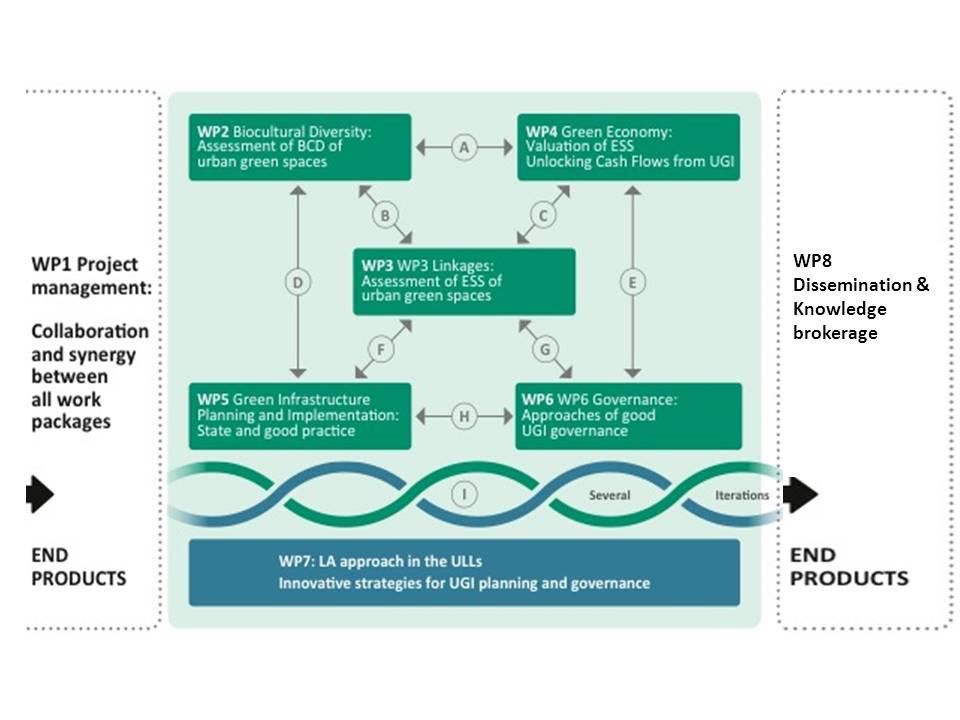
Structure of the Green Surge project: 


The work packages of the research project covered very broad range of topics: planning of green infrastructure, participatory governance of green spaces, economic indications of green space management, biological and biocultural diversity of green spaces in urban environment. In case of all topics several scientific deliverables and guidelines were developed in order to assist the experts and decision makers on local and national level.

All the deliverables of the project can be found at:

http://greensurge.eu


Filed Under: Projects, Urban development, Urban Development Projects

Support to DG REGIO: Guidance on the use of Structural and Investment Funds for educational and spatial segregation (2016-2017)

2017-07-27

Duration: September 2016 – June 2017

Client: DG Regio of the European Commission

The expert TA activities included various forms and served various goals, and had more and less intense phases depending on the needs of the stakeholders and the flow of the respective call for proposal development, or policy development. The activities can be grouped under the following core groups:

  •   facilitating communication among key stakeholders
    • between strategic planners and executive stakeholders within the MAs and ministries
    • between MAs and
  •  thematic expert support in housing and education policies
  • thematic expert support in the partnership process, supporting MAs
  • thematic expert support to beneficiaries (among them SZGYF, and interested other beneficiaries like KLIK and various municipalities)

Results:

Assessment of implementation of the EC guidance on desegregation. In Hungary, in the course of September 2016-June 2017, the guidance’s core recommendations have been incorporated in selected call for proposals. The actual social impact of the guidance can be observed in the forthcoming years since no projects have been implemented so far.

Assessment of the implementation of local actions. In Hungary, in-field local actions that have been designed based on call for proposals that have been harmonised with the guidance have not yet been launched.

Recommendations provided to national authorities during the contract period on embedding de-segregation measures in ESIF-funded actions. The core recommendations were to align the design of available funding according to desegregation goals in both housing and education, and thematic and textual recommendations were made to selected call for proposals to make sure that the recommendations are practical and feasible.

Conclusions of synergies and coordination at national level between different ESIFs and relevant national authorities (e.g. MAs). At the technical level, some more coordination seems to be essential, especially in the area of housing desegregation measures, because two line ministries take responsibility for such actions. Also, smoother coordination between strategic planning and executive stakeholders could facilitate the implementation of ESIF.

Summary to EC and recommendation to Hungarian authorities on the mapping exercises. In the Hungarian context, so far only few desegregation measures have taken place in education and housing. Obviously, the current political leadership in the respective line ministry is rather reluctant to undertake real steps to foster desegregation in education. For housing measures, SZGYF has a dedicated task to compile best practices and disseminate them among potential beneficiaries as part of its EU funded TA project.

Coordination and compliance with national strategies. In the Hungarian context, the content and goals of the NSIS II are fully in line with the guidance. However, the actual political discourse and actions do not reflect the strategy. The forthcoming local urban housing related projects will be more advanced (they have been designed based on the previous implementation period’s lessons, actually independent from the guidance), and the rural housing integration projects are still under evaluation. Hence, their compliance with the strategy cannot be judged yet.


Filed Under: Poverty and Exclusion Projects, Projects

REELIH – RESIDENTIAL ENERGY EFFICIENCY FOR LOW-INCOME HOUSEHOLDS (2014-2016) 

2016-12-12

Client: Habitat for Humanity International, financed by USAID

Duration: August 2014 – September 2016

REELIH looked at the increase of energy efficiency and the refurbishment of dilapidated buildings inhabited by low-income households as a way to counter effectively and on a long-term basis the energy poverty of households. Concentrating on Armenia and Bosnia, the project consisted of need assessment in the designated countries, advocacy work and pilot projects. MRI staff acted consults, focusing on three activities:

  • Providing constant support to the local Habitat offices (commissioned to carry out the local projects) in Bosnia and Herzegovina, and Armenia by assisting the field research, supporting the reporting process, and formulating recommendations for the two countries about the conditions of establishing a successful national/cantonal programs;
  • Undertaking the comparative analysis of energy efficiency renewal programmes in four Central and Eastern European countries: Hungary, Poland, Slovakia, and Romania;
  • Elaborating a final report, comprising of the synthesis of national and regional research findings in the CEE countries and formulating policy recommendations on the national and regional level .

MRI concluded that introducing the same energy efficient interventions in Armenia and Bosnia are not feasible targeting low-income households, as only middle to upper middle class households could afford financing these interventions, even with public sector support. In addition, the most significant impediments against energy efficient renovations in the multi-family building stock are rooted in the inadequate legal system (insufficient laws and regulations on condominium management) and the ineffective operation of the financial system (risk-avoiding behaviour of financial institutions).

Filed Under: Housing Projects, Poverty and Exclusion Projects, Projects

  • « Go to Previous Page
  • Go to page 1
  • Go to page 2
  • Go to page 3
  • Go to page 4
  • Go to page 5
  • Interim pages omitted …
  • Go to page 7
  • Go to Next Page »

Primary Sidebar

News

  • HOUSE4ALL publication: MRI proud to contribute
  • Urban Governance Academy second year closing ceremony
  • European Week of Regions and Cities (EWRC) section on “Unlocking the Power of EU Funds for Cities”
  • The 2025 European Network for Housing Research (ENHR) Conference in Grand-Paris
  • József Hegedüs’s mentee obtained her PhD
  • New Brochure on Energy Efficiency Renovations in CEE+SEE is now online
  • ReHousIn Policy Lab in Budapest
  • ESPON URDICO Kickoff meeting in Budapest
  • Workshop on the dilemmas of the Social Climate Plan
  • MRI as partner in the MICAD project

Metropolitan Research Institute · Városkutatás Kft. © Copyright 1989-2019 · All Rights Reserved

Honlapkészítés: Prémium Honlap