In the COVID 19 crisis cities are key stakeholders fighting for environmental and social sustainability. Their contribution to tackling the present crisis could serve as a blueprint for future social policies that take into consideration social justice and the green economy. In many countries, cities are the last bastion of progressive social policies. It is therefore essential that we learn from the mistakes of the past and avoid a renewed wave of austerity against municipal budgets. In this paper, concrete examples are given of the vital role local governments play in the fight against the pandemic.
News
Critical Housing Analysis: Issue 2020/1 released – edited by József Hegedüs
The special issue “Varieties of Housing Regime Approaches” edited by József Hegedüs aims to discuss different theoretical concepts and their empirical relevance. It represents a unique collection of seven papers written by leading housing researchers in this field.
‘Urban poverty and the pandemic’ in URBACT by Iván Tosics
Iván Tosics has published an article in URBACT website on raising the importance of local solutions for the social and economic affects of the Covid-19 crisis that is hitting the poorest. Tosics explores in this article what URBACT’s role could be on finding local solutions.
The full article is available in English on this link.
A new H2020 Project, coordinated by MRI, was just kicked-off in Budapest
UPLIFT project – “Urban PoLicy Innovation to address inequality with and for Future generaTions” (2020-2022) coordinated by MRI – has successfully launched on 28-29 January in a kick-off meeting organized in Budapest.
The UPLIFT project aims to understand the main drivers of urban socio-economic and spatial inequalities focusing mainly on the younger generation (15-29) in the post-crisis area. The analysis will be done on four levels: (1) understanding the relation between socio-economic inequalities and spatial inequalities on European level, (2) understanding how local policies are able to influence urban inequalities in a sample of 16 functional urban areas, (3) analysing by means of interviews with vulnerable young and policy experts how local policies are in interaction with household decisions in 8 cities. As a result of all these analyses, UPLIFT will create – with the active involvement of vulnerable youth – local Reflexive Policy Agendas: new local policies that are more sensitive to the changing needs of the target group. This co-creation process will be carried out in 4 locations: Amsterdam (NL), Barakaldo (ES), Sfântu Gheorghe (RO), and Tallinn (EE).
7th Informed Cities conference: Who profits from heritage?
OpenHeritage project, led by Metropolitan Research Institute, organized its first international event in Warsaw in October 2019, in the framework of the Informed Cities Forum series, in cooperation with ICLEI – Local Governments for Sustainability, and the Actors of Urban Change network.

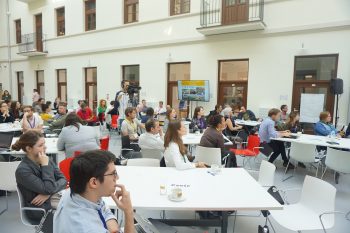
The 7th Informed Cities forum was a two-day event called “Who profits from heritage? Communities, capital and urban space”. It took place on 15-16 October, and explored the interrelation between urban regeneration and heritage, reflecting on the importance of community involvement and the creation of a heritage community. The latter is a crucial building block of all successful projects. As Katarzyna Sadowy of OpenHeritage partner Warsaw Association of Polish Architects (OW SARP) pointed out in her keynote speech, “heritage doesn’t exist without the heritage community – people who make the buildings, places, stories part of their identity”.
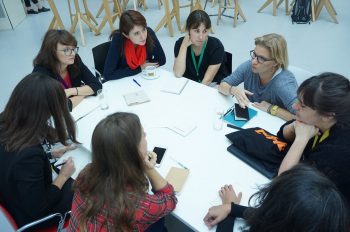
Building on the experience of the OpenHeritage project and the Actors of Urban Change community, the Forum explored new ideas and tools to empower local communities and safeguard urban commons. The realities, challenges and successes of urban regeneration were illustrated through a series of field workshops organised by local partners representing the public, private and community sectors in Warsaw. The workshops explored community-managed spaces; partnerships for creative districts; the future of urban peripheries; mapping values using heritage; and modern placemaking.
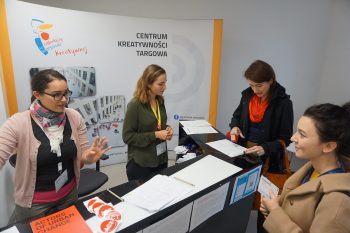
The event gathered more than 100 participants, who were a mix of urban activists, social entrepreneurs, local and European policy makers, researchers and investors.

HomeLab: closing conference in Budapest
Te closing conference of HomeLab – Integrated Housing and Labour Services in the Social Rental Enterprise model – will take place on 26-27 September 2019, in European Youth Centre Budapest.
HomeLab was launched in 2016, and aimed at providing integrated social, housing and employment services to vulnerable, often multiply excluded target populations in the four “Visegrad” countries (Czechia, Hungary, Poland, and Slovakia). The closing conference, final event of a three year experimental and research project, assesses the difficultues and achievements of both the pilot projects, and the research stream of HomeLab, looking in particular at the promises and challenges of integrated service provision to excluded socio-economic groups. In the sessions from Thursday morning until Friday early afternoon discussants will look at innovations in housing and employment support, in social accompaniment strengths and deficiencies in the Central and Eastern European context, and on the ways in which integrated support measures may fold out in a mutually supporting manner.
The full programme is available on this link.
MRI 2019 conference and call: Urban and Housing Systems under Pressure
Urban planning and the aftermath of the crisis: Iván Tosics in Urbanisme
The global crisis and recession created a new situation for urban financing. Severe changes in economic and financial conditions extorted the revision of existing public policies. Under the worsening financial conditions, the traditional functioning of cities collapsed – writes MRI director Iván Tosics in the special issue of Urbanisme, focusing on the URBACT programme.
OpenHeritage (2018-2022)
OpenHeritage
Organizing, Promoting and Enabling Heritage Re-use through Inclusion, Technology, Access, Governance and Empowerment
Client: Európai Bizottság (DG Research and Innovation)
Duration: June 2018 – May 2022
Project website: https://openheritage.eu/
Social media: https://www.facebook.com/OpenHeritageEU/
The project, funded under DG Research and Innovation’s H2020 framework programme, creates a sustainable management model of heritage assets. We work with an open definition of heritage, and involve sites that are not listed or incorporated into the official heritage discourse. The OpenHeritage consoritum concentrates 16 partners, among which universities and research institutes, SMEs, and NGOs, and is led by Metropolitan Research Institute. The project coordinator is Hanna Szemző, managing director of Metropolitan Research Institute.
The consortium focuses on buildings, complexes, and spaces which lie outside traditional and centrally located heritage spaces, but have an important symbolic or practical significance for local and trans-local communities. Through community and stakeholder involvement, resource integration, and territorial embeddedness, OpenHeritage selects, surveys and analyses peripheral, often marginalised and neglected heritage sites spread over sixteen Observatory Cases and six Cooperative Heritage Labs in ten European countries.
For the high resolution project poster, please click on the image below:

Energy transition in CEE: MRI study for Prince of Wales’s CLG
Hanna Szemző, managing director of Metropolitan Research Institute gave a presentation at the launch event for a new report by the Prince of Wales’s Corporate Leaders Group (CLG) titled ‘The energy transition in Central and Eastern Europe: The business case for higher ambition’ in Bucharest on the 21 of March 2019.
Győr: How to compete with capital cities (2018-2019)
Client: European Investment Bank – City, transformed
Duration: June 2018 – February 2019
Located between three European capital cities, Győr has to work hard to attract investment and jobs. The Hungarian city has set itself up to attract innovative companies, creating new urban values such as education-based innovation, a high-quality urban environment and a lively cultural sphere. Here’s how a “secondary city” builds on its industrial past even as it breaks away from its dependence on it.
European Investment Bank (EIB) contracted MRI to elaborate a study on the development pathway of Győr in the last decades, and the role EIB played in it. The study pointed out that Győr is located in between three major cities (Vienna, Bratislava, and Budapest), consequently it had limited potential to attract a mix of large companies and investors. Nonetheless, it had the potential to deploy smart specialisation – and it succeeded in doing so. Győr has been known for its highly qualified work force: before the regime change and economic restructuring, one of the largest state-owned companies (RÁBA machinery) was located here. After the transition, the decreased relevance of RÁBA was compensated by the newly settled Audi Hungaria plant, which has come to employ as much work force as RÁBA did in its heyday. In addition, this considerable manufacturing capacity attracted numerous smaller companies to join the value chain.
The operation of Audi Hungaria is one of the economic engines of the second-tier city. However, it also runs the risk of mono-functionality and high dependence on car industry trends. In order to diversify the local economic structure, a new cooperation is currently being established between the local university (Széchenyi István University), the municipality, and local economic actors. This already resulted in new developments, like the Higher Education and Industrial Cooperation Centre (FIEK in Hungarian).
Győr’s recent development has been strongly supported by European funds (similarly to all Hungarian cities), in which national co-financing was secured by EIB loans. The majority of these funds was absorbed by the private sector, although large scale public developments were also implemented, like the two-stage renovation of the inner city, and the social rehabilitation of Győr-Újváros. In addition, EIB provided loans to commercial banks for various purposes, among others for the renovation of privately owned residential buildings in ESCO schemes (the RaabSol project).
The study is available on EIB’s website in English, German, French, and Hungarian; and was also promoted on the EIB’s blog and social media.
Conversation paper on the energy transition in Central and Eastern Europe (2018-2019)
Client: University of Cambridge Institute for Sustainability Leadership
Duration: October 2018-March 2019
The Prince of Wales’s Corporate Leaders Group (convened by the University of Cambridge Institute for Sustainability Leadership) contracted MRI as the leading party of a consortium to produce a conversation paper on the energy transition in Central and Eastern Europe (CEE). This relatively short, business oriented document sought to highlight the main aspects of energy transition and called attention to the business opportunities it offers. The paper covered three interrelated topics: the transition in energy generation, the energy efficient interventions in the building stock and finally the transition trends in urban mobility. MRI cooperated with Energiaklub, Mobilissimus ltd as companies, and Ada Ámon from E3G as a private consultant to cover all aspects.
The paper emphasized both the similarities among the Central and Eastern European countries (11 new member states of the EU according to the interpretation of the study except for Malta and Cyprus) rooted in the socialist past, the relatively lower level of economic productivity and such factors as high homeownership rates, lower level of energy awareness, and high price sensitivity. It also showcased the growing differences, with a few front runner countries in building renovations and mobility solutions (e.g. Czech Republic), some with well advanced digital solutions (e.g. Estonia), and others suffering from particular difficulties, such as high level of pollution and the related coal mining problems (e.g. Poland).
The study demonstrated that the existing high potential of the region regarding renewables is far more than the currently exploited capacities. This gap is the result of political considerations (being reluctant to upset the status quo) and the high public investment needs. Furthermore, there is great potential in the energy efficiency renovation of the building stock, especially that the mass construction of industrialised buildings allows the development of standardised renovation solutions. Finally, while CEE countries are more used to environmental friendly mobility modes (public transport accounts for a considerable share of all journeys even today), the lower purchasing power can be a barrier to effective energy transition in the mobility sector, as it slows down the uptake rate of electric vehicles.
In spite of these difficulties, the CEE region has a high growth potential regarding the energy efficient investments. However the spread of a reliable and stable regulatory environment will be crucial in all CEE countries in order to allow businesses to operate and make use of the high market potential.
The full report is available at the The Prince of Wales’s Corporate Leaders Group website.